![[Korean Culture] Why is There a ‘Fish’ on That Bag? 🐟 3 Traditional Korean Lucky Charms](https://assets.k-learnstay.com/cdn-cgi/image/width=1920,quality=80,format=auto,fit=cover/cms/stories/korean-culture-why-is-there-a-fish-on-that-bag-3-traditional-korean-lucky-charms/cover.png)
[Korean Culture] Why is There a ‘Fish’ on That Bag? 🐟 3 Traditional Korean Lucky Charms
Published:
Hello! Welcome to Korean Language Village, your guide to fun and fascinating stories about Korea.
If you’ve ever walked the streets of Korea, browsed a traditional market, or relaxed in a cozy Hanok cafe, you might have spotted some of these unique items:
🐟 A cute, dried fish-shaped doll or wooden carving 🧺 A miniature woven bamboo basket 🐂 A wooden, donut-shaped ring
At first glance, you might think, “What in the world are these?" or “Why is that hanging on a backpack?” While they might look like simple souvenirs, these items are actually traditional Korean lucky charms that have been cherished for centuries!
In the past, Koreans would hang these at the entrance of their homes or rooms to ward off evil spirits and invite good fortune. Today, they’ve been reimagined with trendy designs and are widely loved as bag charms (keyrings) or car mirror accessories.
Let’s dive into the stories behind these 3 special traditional items that bring good luck into the daily lives of Koreans! 🧡
1. 🐟 Warding Off Bad Luck: ‘Myeongtae’ (Dried Pollack)
If we had to pick the most famous lucky charm in Korea, it would definitely be the ‘Myeongtae’ (Dried Pollack).
Since ancient times, Koreans have considered dried pollack to be a very sacred fish. It was a common custom to hang a real dried pollack wrapped in a spool of thread over the front door when moving into a new house or opening a new business.
But why a pollack? 🤔
Wide-Open Eyes: A pollack’s large eyes are always open, so people believed it would keep a watchful eye out day and night to block bad luck (evil spirits) from entering the home.
Big Mouth: Its wide-open mouth is believed to gobble up good luck and wealth, keeping it safe inside the house.
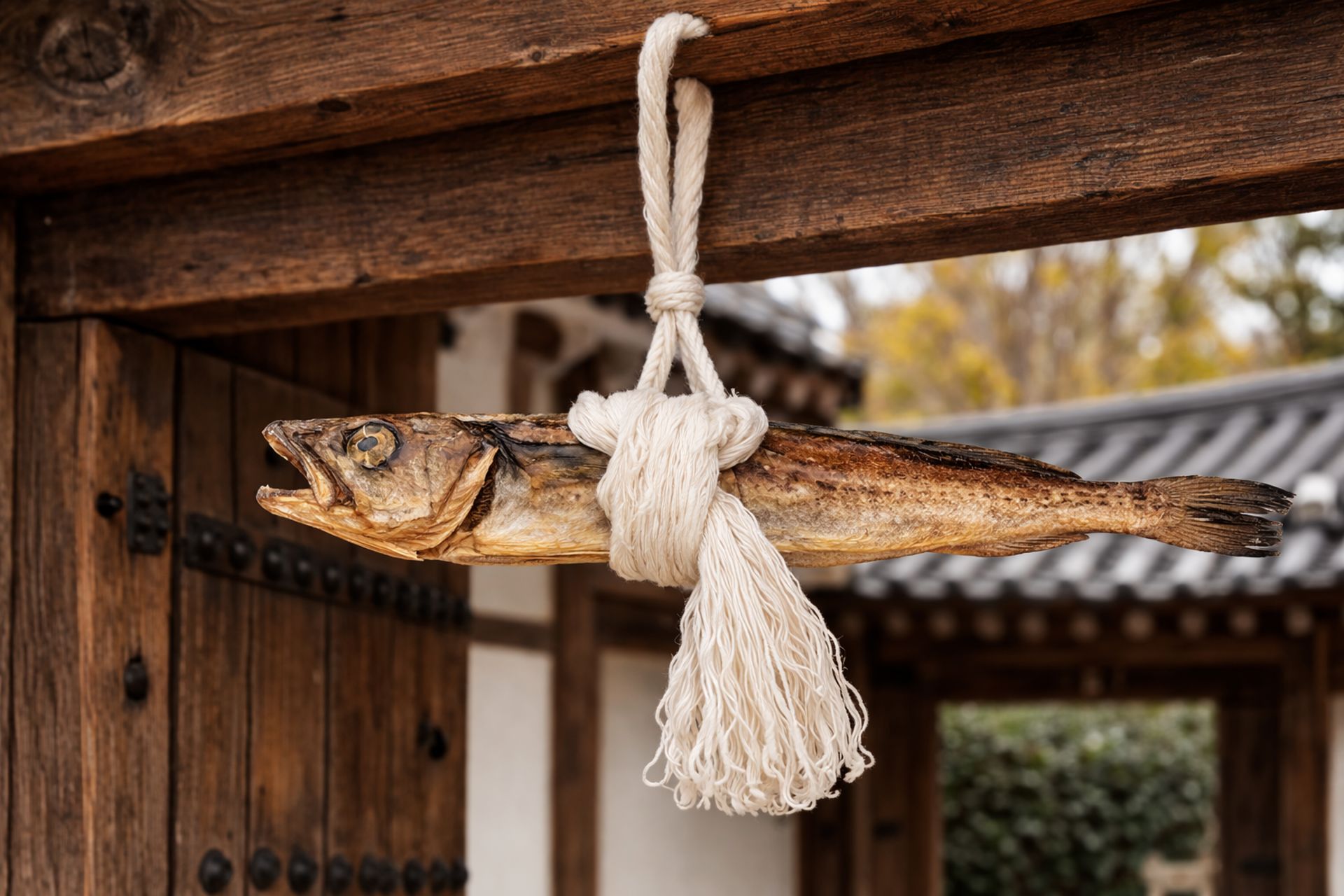
These days, instead of real fish, people carry around intricately carved wooden fish or cute plush Myeongtae keyrings on their bags or in their cars. Think of it as a small, personal talisman protecting the well-being of someone you care about!
2. 🐂 Reeling in Wealth and Peace: ‘Kkotture’ (Bull’s Nose Ring)
Our second item has a slightly more unique shape. It’s called a ‘Kkotture’. Originally, a Kkotture was a wooden farming tool, a ring pierced through a bull’s nose to help guide and manage the animal. In traditional agrarian Korea, a bull wasn’t just an animal; it was a family’s greatest asset and almost like a family member.
Naturally, the Kkotture took on powerful symbolic meanings: Wealth and Prosperity: A wish to work diligently like a bull and become wealthy.
Family Stability: Just as a steadfast bull protects the home, it represents a wish for peace and harmony in the family.
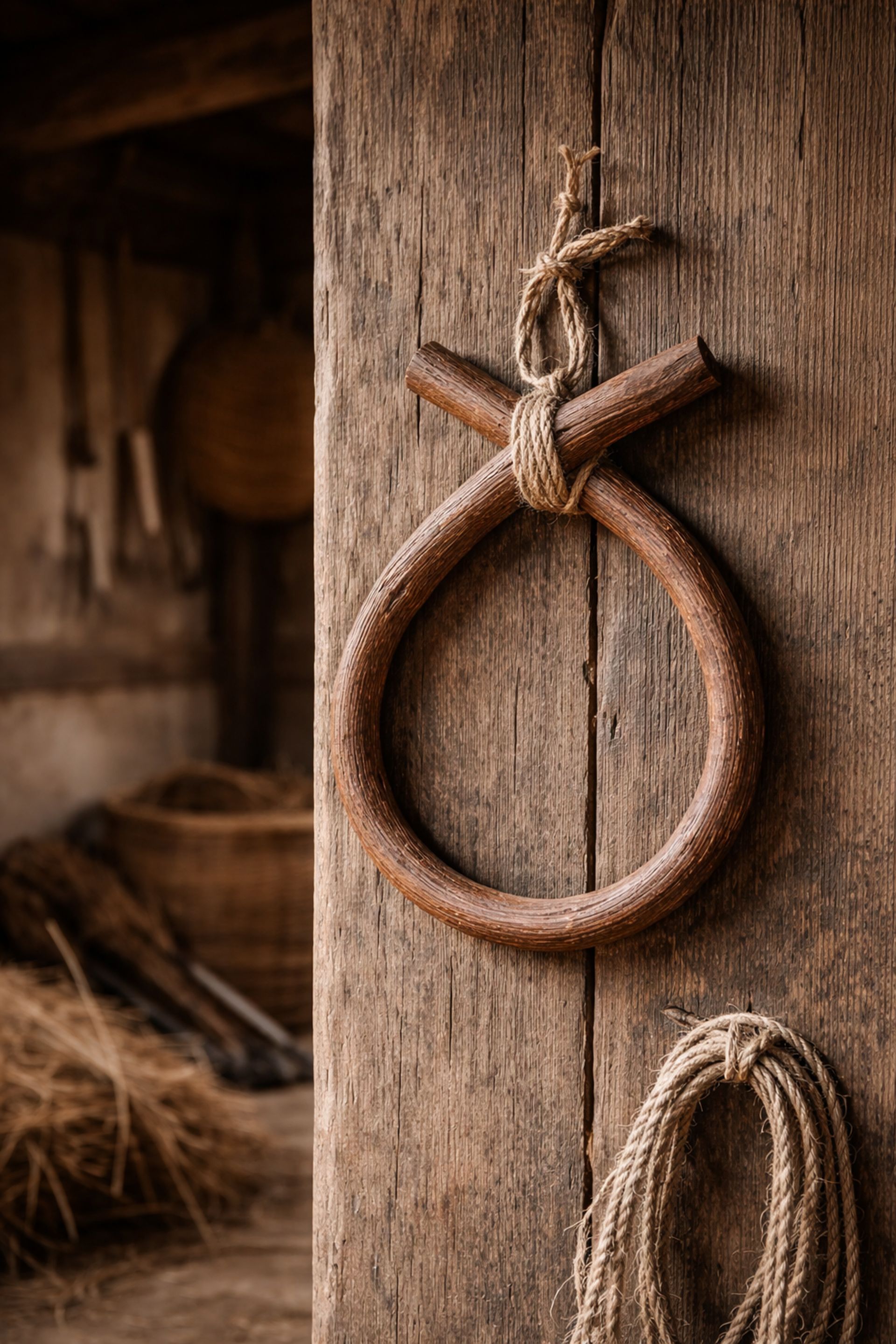
Since Korea is no longer primarily an agricultural society, the Kkotture isn't used as a farming tool anymore. Instead, it is interpreted as a charm that “threads or catches good luck.” You can often see them made into small decorative frames or ornaments in traditional restaurants or cafes. They are also a very popular gift to wish someone success in their business!
3. 🧺 Scooping Up This Year's Luck: ‘Bokjori’ (Bamboo Strainer)
The final item literally has the word ‘Bok' (meaning good luck/fortune) in its name: the ‘Bokjori’.
A ‘Jori’ is originally a kitchen tool used to wash rice, swirling it in water to strain out small stones or impurities. Koreans had a tradition of hanging these strainers on the wall during Seollal (Lunar New Year).
There’s a very clever shift in meaning here: Filtering Fortune: Just like filtering rice, the Bokjori symbolizes straining out the bad luck of the year and scooping up only the ‘good luck’.
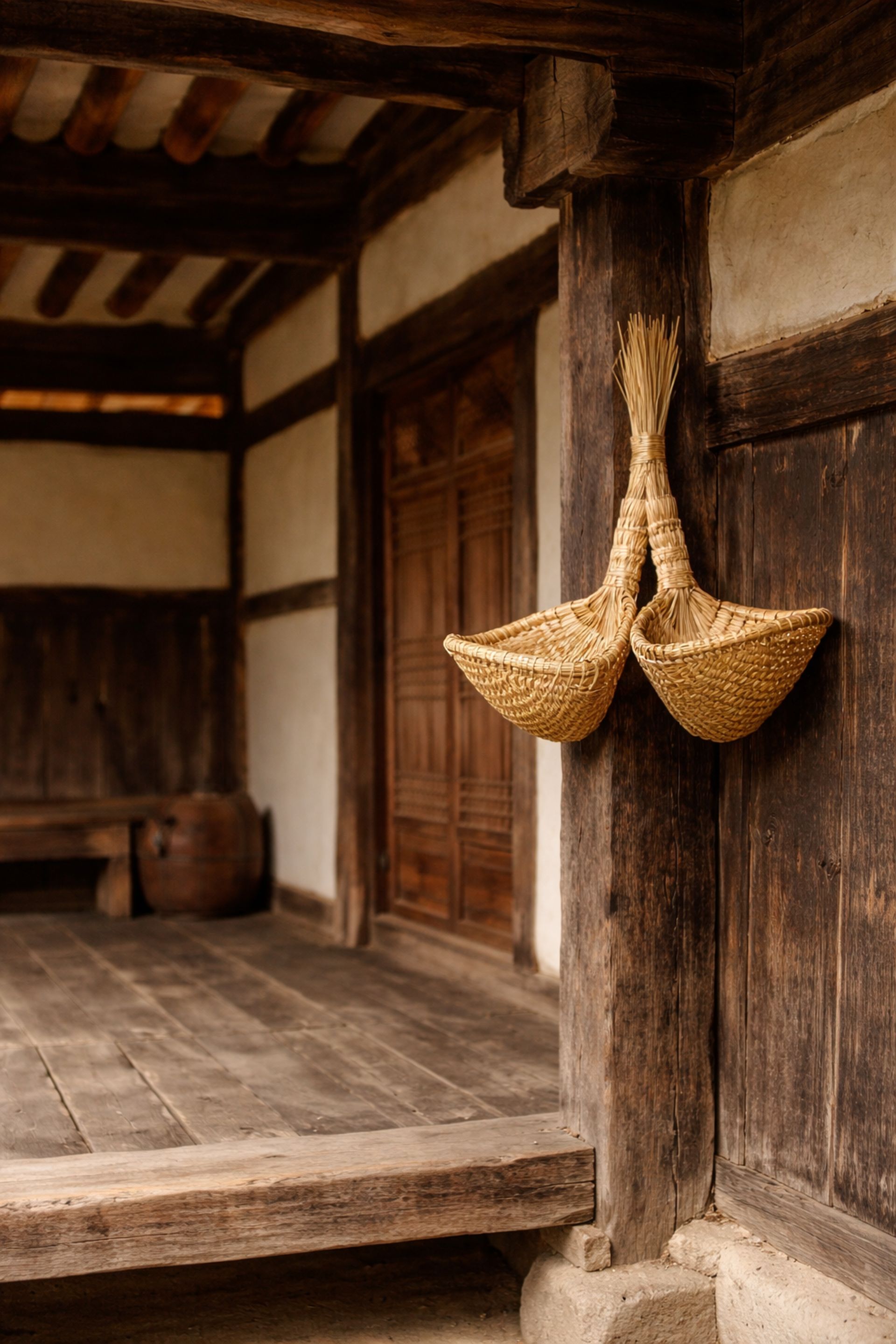
Therefore, the Bokjori perfectly symbolizes a wish for wealth to flow in and a prayer for health and fortune in the coming year. If you visit a traditional market around the Lunar New Year, you’ll easily find cute mini Bokjori ornaments decorated with colorful threads or coins.
👉 Traditional Items Become the Hippest Fashion Accessories!
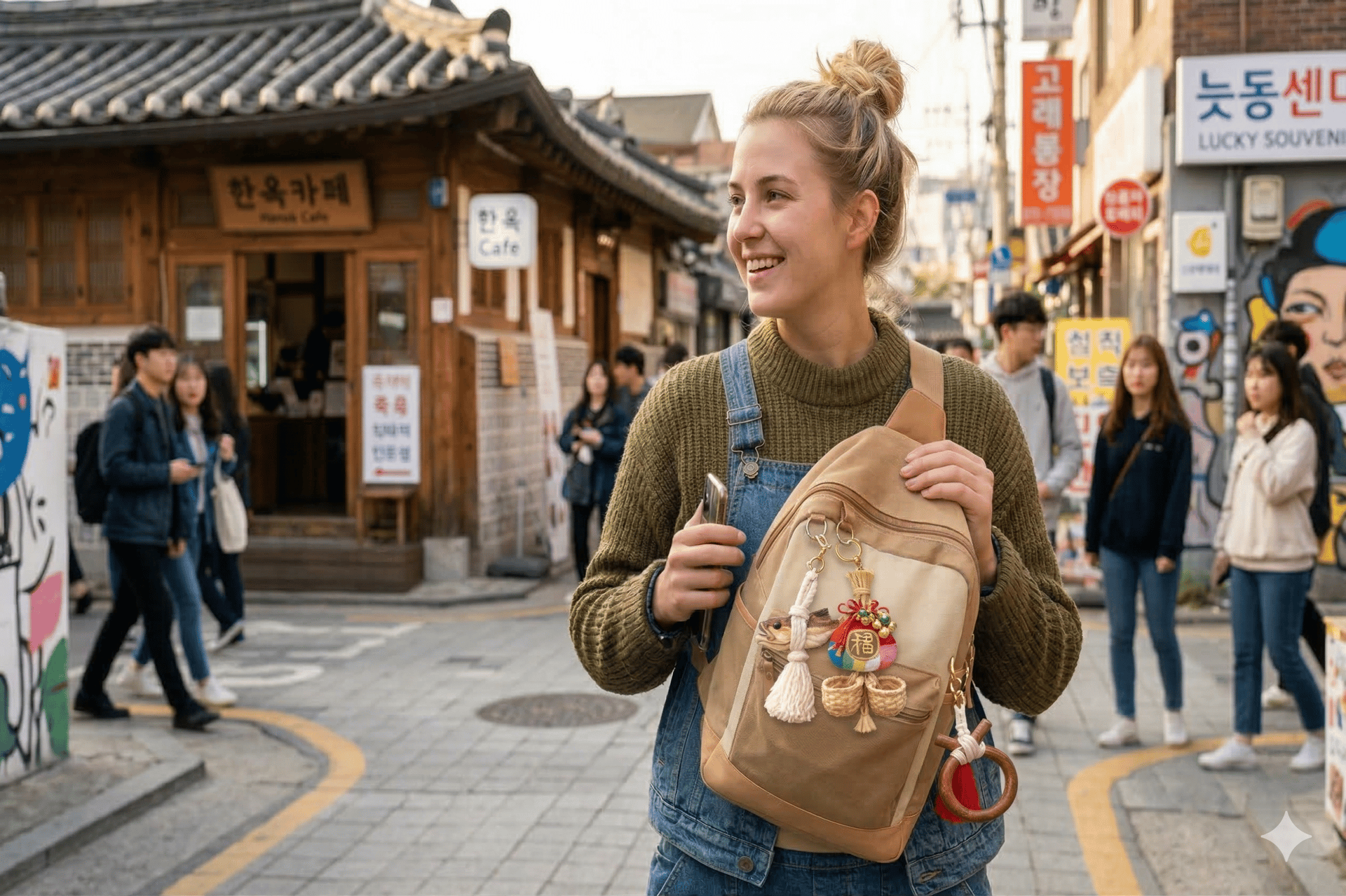
Items that were once considered old superstitions have been completely rediscovered by the younger generation in Korea as “hip” new fashion items. While keeping their traditional meanings intact, these charms are now made with stylish designs and beautiful colors, transforming into: Eye-catching keyrings for plain backpacks Comforting protective accessories hanging in cars Aesthetic interior decor for homes Meaningful souvenirs to remember a trip to Korea
When you see a Korean person carrying a cute fish doll on their bag, it’s more than just a passing trend. It’s a warm cultural expression—a small way of wishing each other peace and good luck in their daily lives.
[Recommended Image: The generated image of a backpack with various traditional item keyrings]
❤️ One More Thing About Korean Culture!
For a very long time, Koreans have tried to infuse good energy into even a single word or a small object. These traditional items aren’t just simple decorations; they are the physical embodiment of wishing happiness and well-being for beloved family and friends.
If you happen to spot these decorations while traveling in Korea, don’t just walk past them. They aren’t merely souvenirs; they might just be a warm Korean story wanting to share a little bit of good luck with you. 😉
Which lucky charm is your favorite? Let us know in the comments below! 👇